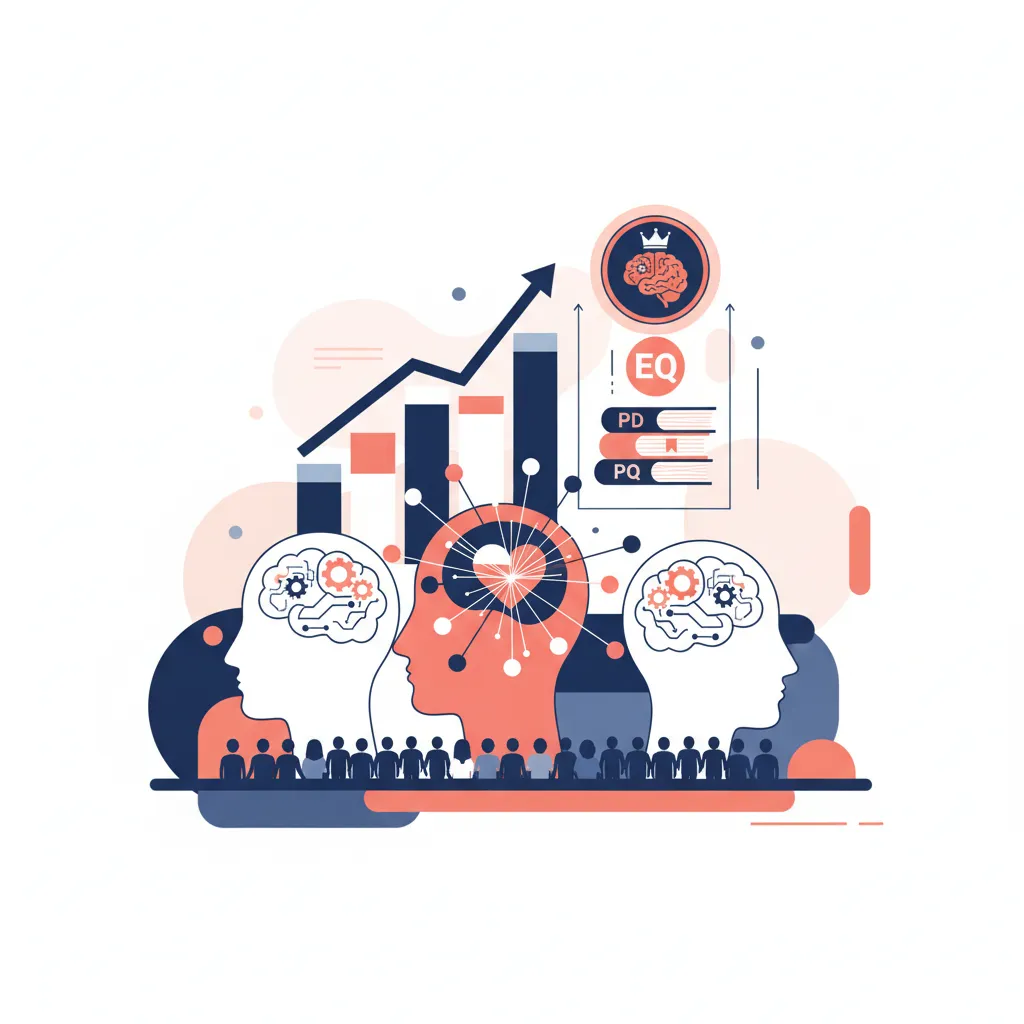
Emotional intelligence training has become the most sought-after professional development topic, with 92% of organizations reporting it as a critical skill gap that directly impacts productivity, leadership effectiveness, and team performance.

Join thousands of PD professionals getting the latest strategies, trends, and best practices delivered to their inbox.
Picture this: You're sitting in a leadership meeting when the CEO announces quarterly results are down 15%. The room immediately divides into two camps. Half the executives start pointing fingers and raising voices, while the other half maintains composure, asks thoughtful questions, and begins collaborative problem-solving. Guess which group demonstrates higher emotional intelligence—and which approach ultimately drives better business outcomes?
If you're a professional development trainer, you've likely witnessed this scenario countless times. More importantly, you've probably noticed the increasing number of organizations reaching out specifically for emotional intelligence (EQ) training. In fact, recent industry data shows that EQ training requests have surged by 67% over the past three years, making it the most sought-after professional development topic across industries.
But why this sudden obsession with emotional intelligence? And what does this trend mean for independent trainers and L&D professionals?
The pandemic fundamentally shifted how we work, communicate, and lead. Suddenly, managers found themselves trying to motivate teams through screens, reading body language over video calls, and maintaining company culture across time zones. Traditional leadership approaches—those heavily reliant on physical presence and in-person communication—fell short.
Sarah Chen, an independent leadership consultant based in Portland, shares her experience: "I used to get maybe one EQ training request per quarter. Since 2022, it's been at least two per month. Leaders are telling me they feel 'emotionally blind' when managing remote teams."
This shift exposed a critical gap: technical skills and traditional management training hadn't prepared leaders for the nuanced emotional navigation required in hybrid and remote environments.
Today's workplace spans five generations, each with distinct communication styles, motivational drivers, and emotional needs. Baby Boomers value direct feedback and hierarchical respect, while Gen Z employees seek psychological safety and authentic leadership. Managing this spectrum requires exceptional emotional awareness and adaptability.
Consider this scenario: A Gen X manager needs to deliver performance feedback to a millennial employee who's struggling with work-life balance while also mentoring a Gen Z team member who craves frequent recognition. Each interaction requires different emotional approaches, and the old "one-size-fits-all" management style simply doesn't work.
Organizations are finally recognizing the business impact of employee mental health. According to the World Health Organization, depression and anxiety disorders cost the global economy $1 trillion per year in lost productivity. Companies are investing in EQ training not just for leadership development, but as a proactive approach to creating psychologically safe workplaces.
When clients reach out for EQ training, they're not asking for abstract concepts or feel-good workshops. They have specific, measurable challenges:
"We need help with the uncomfortable stuff," is how one HR director put it. Organizations want training that enables employees to navigate workplace conflicts, deliver tough feedback, and handle sensitive situations without damaging relationships or team morale.
The request often sounds like: "Our high-performers are struggling when promoted to leadership roles." Technical expertise doesn't automatically translate to effective people management. Organizations need training that develops the emotional skills required for inspiring, motivating, and guiding others.
In an era of constant organizational change, companies are seeking EQ training that helps employees and leaders adapt, manage uncertainty, and maintain performance during transitions. The focus is on building emotional resilience and helping teams navigate change-related stress and anxiety.
B2B and B2C organizations alike are requesting EQ training for client-facing roles. The ability to read client emotions, adapt communication styles, and manage difficult customer interactions directly impacts revenue and retention rates.
Organizations aren't investing in EQ training because it sounds nice—they're doing it because the return on investment is measurable and significant:
Productivity Gains: Companies with emotionally intelligent leaders report 20% higher productivity rates and 25% lower employee turnover.
Sales Performance: Sales teams trained in emotional intelligence show average revenue increases of 18-25% within the first year post-training.
Leadership Effectiveness: 90% of top performers have high emotional intelligence, while only 20% of bottom performers demonstrate strong EQ skills.
Team Performance: Teams led by emotionally intelligent managers are 5x more likely to be high-performing and show 67% less burnout.
The demand for quality EQ training far exceeds the supply of skilled trainers. This presents a significant opportunity for professional development specialists to develop deep expertise in this area. However, it's not enough to simply add "emotional intelligence" to your service menu—organizations want trainers who understand the nuances of workplace EQ application.
The most successful EQ training programs don't treat emotional intelligence as a standalone topic. Instead, they integrate EQ principles into leadership development, communication skills, team building, and change management programs. Smart trainers are weaving emotional intelligence concepts throughout their existing curricula.
Organizations want training that translates immediately to workplace situations. The most requested EQ training components include:
Effective EQ training begins with helping participants understand their current emotional intelligence baseline. Tools like the EQ-i 2.0 or Emotional Intelligence Appraisal provide concrete data that drives engagement and creates personalized development pathways.
Generic emotional intelligence training falls flat. The most impactful programs use real workplace scenarios, industry-specific challenges, and role-relevant situations. A healthcare EQ program looks dramatically different from one designed for software developers or financial services professionals.
Emotional intelligence isn't learned in a single workshop. Successful programs build skills progressively:
EQ skills require practice in safe environments before being applied in high-stakes workplace situations. Effective training includes coaching conversations, peer feedback sessions, and structured practice opportunities.
As artificial intelligence automates more technical tasks, emotional intelligence becomes increasingly valuable as a distinctly human capability. Organizations are beginning to view EQ not as a "soft skill" but as a core competency essential for business success.
Looking ahead, expect to see:
For independent trainers and L&D professionals looking to capitalize on this trend, here's a strategic approach:
Invest in Your Own EQ Development: You can't teach what you don't embody. Pursue advanced EQ certification and assessment training.
Research Industry-Specific Applications: Understand how emotional intelligence manifests differently across industries and roles.
Develop Measurement Tools: Create methods for tracking and demonstrating the ROI of your EQ training programs.
Build Strategic Partnerships: Connect with organizational psychologists, executive coaches, and HR consultants who can provide referrals and collaborative opportunities.
Stay Current with Research: The field of emotional intelligence continues evolving. Subscribe to relevant journals and attend professional conferences to maintain expertise.
The emotional intelligence training boom isn't a fleeting trend—it's a fundamental shift in how organizations view human capabilities and workplace effectiveness. For professional development trainers, this represents both an opportunity and a responsibility. The opportunity to build expertise in one of the most in-demand training areas. The responsibility to deliver programs that create measurable impact on individuals, teams, and organizational performance.
As one client recently told me: "We can teach technical skills to anyone. But emotional intelligence? That's what separates good employees from great leaders." The question isn't whether you should add EQ training to your repertoire—it's how quickly you can develop the expertise to meet this growing demand.
Ready to develop your emotional intelligence training capabilities? Start by assessing your own EQ baseline and exploring certification programs that will give you the credibility and tools to serve this exploding market effectively.
PD World brings you expert insights on professional development, training methodology, and L&D best practices. Our content is crafted to help trainers and organizations elevate their impact.